Vaginitis vs Cervicitis
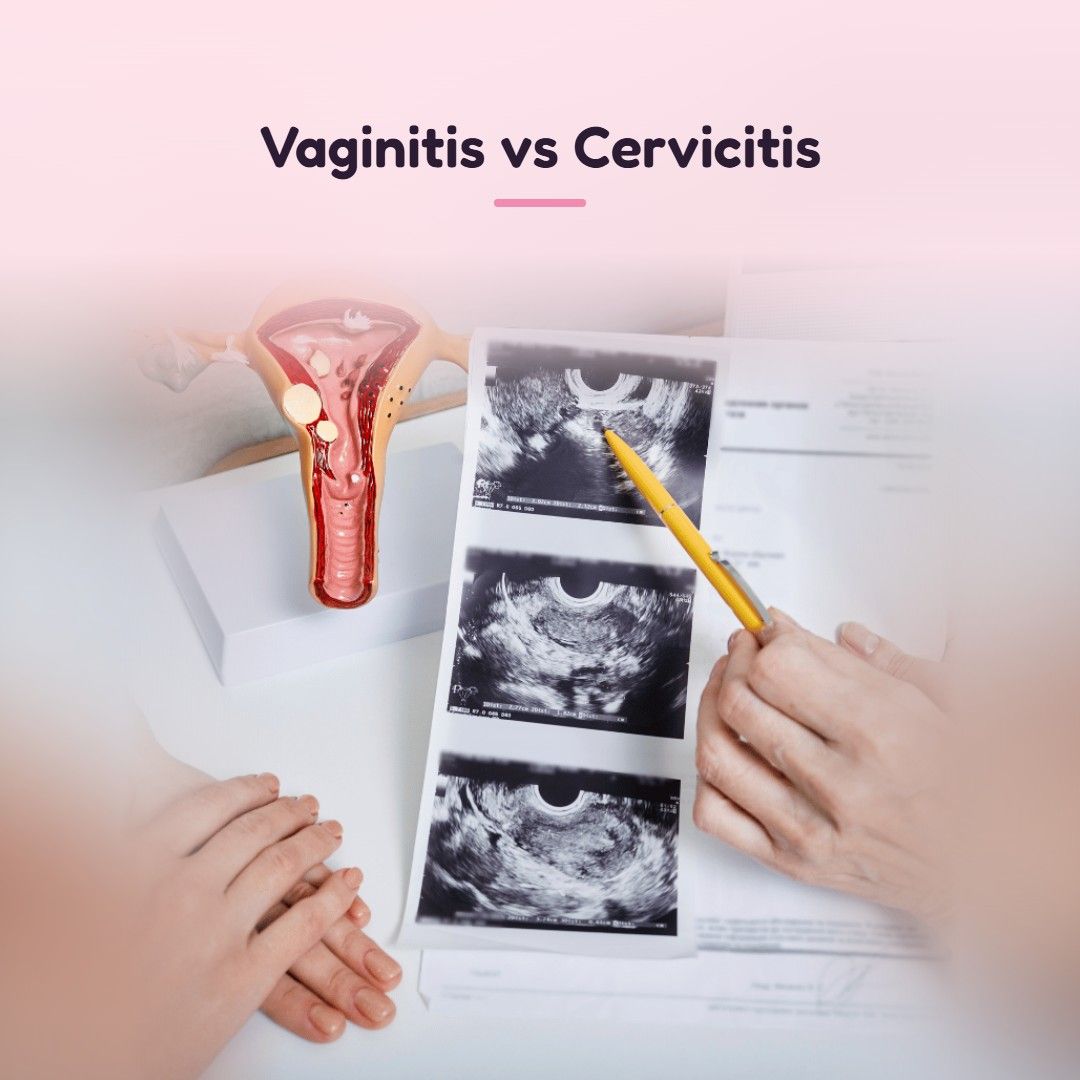
Quick answer: Vaginitis is inflammation of the vagina, usually from yeast, bacterial vaginosis or trichomonas, and typically causes itching, odor or changed discharge. Cervicitis is inflammation of the cervix, often caused by chlamydia or gonorrhea, and may cause bleeding after sex or no symptoms at all. A pelvic exam with swab tests tells them apart and guides the right treatment.
Where is the difference?
The vagina is the canal leading from the vulva to the cervix. The cervix is the lower, narrow end of the uterus that sits at the top of the vagina.
Because they are connected, symptoms can overlap, and it is possible to have both at once. But the usual causes, and therefore the treatment, are different.
Vaginitis vs cervicitis compared
| Feature | Vaginitis | Cervicitis |
|---|---|---|
| Location | Vaginal walls (and often vulva) | Cervix |
| Common causes | Bacterial vaginosis, yeast (candida), trichomonas, irritation, low estrogen | Chlamydia, gonorrhea, mycoplasma genitalium, trichomonas, herpes; sometimes non-infectious |
| Typical symptoms | Itching, burning, odor, thick or thin discharge | Often none; yellow discharge, bleeding after sex or between periods |
| Itching | Common, especially with yeast | Uncommon |
| Bleeding after sex | Uncommon | Common sign |
| Main tests | Exam, pH, microscopy, sometimes culture or PCR | Exam, PCR for STDs |
| Main risk if untreated | Ongoing discomfort; BV and trichomonas raise STD and pregnancy risks | Spread upward causing pelvic inflammatory disease (PID) |
Verdict: itching and odor point toward vaginitis, while bleeding after sex or a new partner point toward cervicitis; anyone unsure should be examined and tested rather than self-treat.
Common types of vaginitis
Bacterial vaginosis (BV)
An imbalance of vaginal bacteria causing thin gray-white discharge with a fishy smell, often stronger after sex. Treated with prescription antibiotics, usually metronidazole or clindamycin.
Yeast infection (candidiasis)
Thick white discharge with itching and redness, often after antibiotics. Treated with antifungal tablets or vaginal medicine.
Trichomoniasis
A sexually transmitted parasite that can cause frothy yellow-green discharge, odor and irritation. It can also inflame the cervix. Partners need treatment too.
Atrophic vaginitis
Thinning and dryness from low estrogen after menopause or while breastfeeding, causing dryness, burning and pain with sex.
What causes cervicitis?
- Infections: chlamydia and gonorrhea are the most important; mycoplasma genitalium, trichomonas and herpes are others.
- Non-infectious: irritation from products, latex allergy or devices; sometimes no cause is found.
Cervicitis is often silent. It may be noticed only during a pelvic exam, when the cervix looks red or bleeds easily on contact.
How does a gynecologist tell them apart?
- Questions about symptoms, partners, recent antibiotics and products used.
- A speculum exam to look at the vaginal walls, discharge and cervix.
- Quick in-clinic checks such as vaginal pH and microscopy.
- PCR swab for chlamydia, gonorrhea, trichomonas and mycoplasma, often as a multiplex panel.
In Korea, consultation and tests for symptoms are usually covered by NHIS at the clinic co-pay, while extended PCR panels may carry an extra non-covered cost. Ask before testing if cost matters.
Why self-treating can backfire
Over-the-counter antifungal creams only treat yeast. If the real cause is BV, trichomonas or cervicitis from chlamydia, symptoms may persist and an infection can spread. Douching can make both conditions worse.
Frequently asked questions
Can I have vaginitis and cervicitis at the same time?
Yes. Trichomonas, for example, can affect both, and BV often coexists with STDs. Testing for several causes at once is common.
Does cervicitis mean I have an STD?
Not always, but STDs are a frequent cause, so testing is recommended. Some cases have non-infectious causes.
Is bleeding after sex always cervicitis?
No. It can also come from cervical ectropion, polyps or, less commonly, precancerous changes. Make sure your Pap smear is up to date.
Does my partner need treatment?
For trichomonas, chlamydia and gonorrhea, yes. For BV and yeast, routine partner treatment is generally not needed.
The bottom line
Vaginitis usually itches or smells; cervicitis often bleeds or hides. A short exam with swab tests separates them, and correct treatment prevents complications like PID.
This article is for general information and does not replace medical advice. Seek care promptly if discharge comes with fever or pelvic pain.