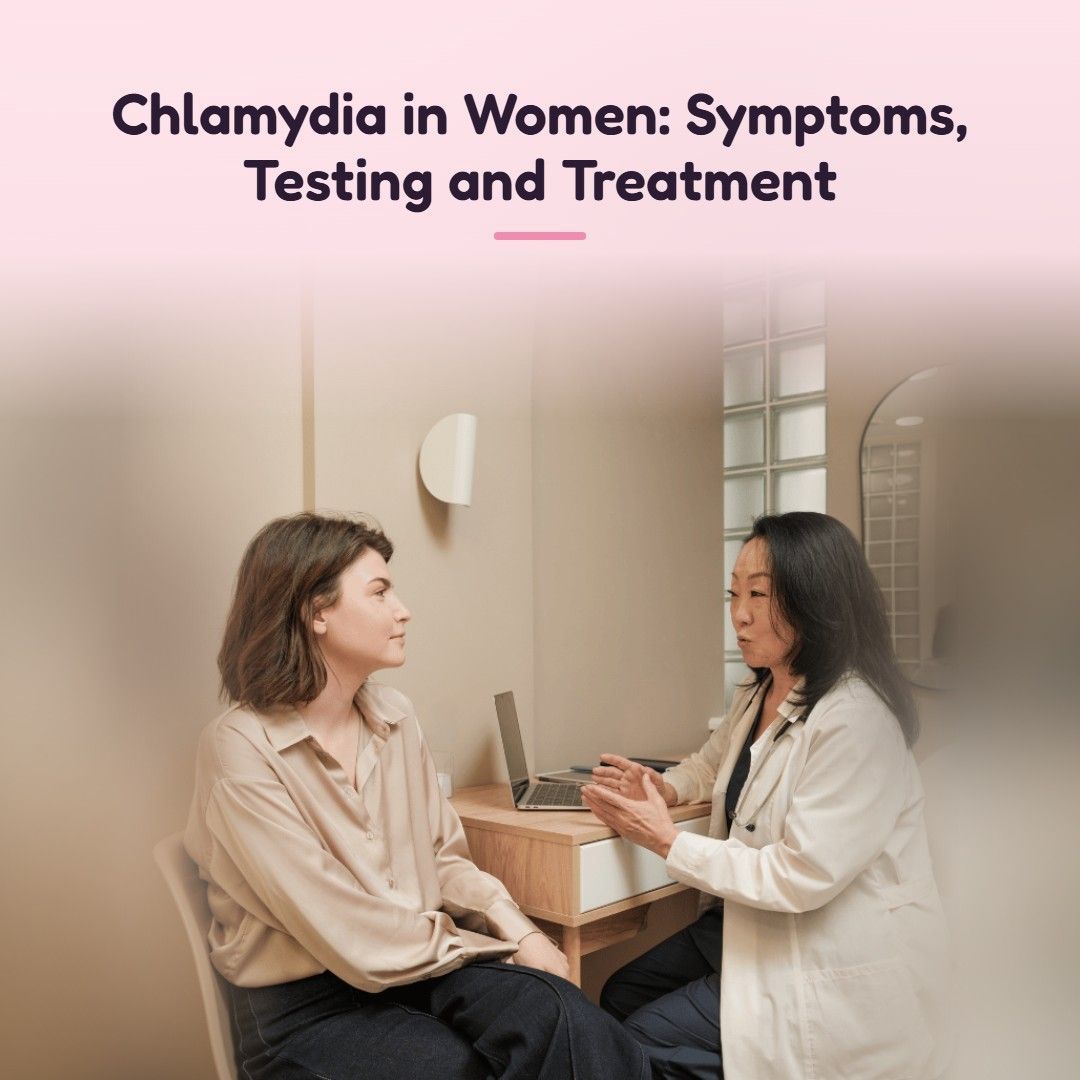
Chlamydia in Women: Symptoms, Testing and Treatment
Quick answer: Chlamydia is a common bacterial STI that usually causes no symptoms in women. When symptoms appear, they include unusual discharge, burning when peeing, bleeding after sex or between periods, and pelvic pain. It is diagnosed with a simple swab or urine PCR test and cured with antibiotics, usually a 7-day course of doxycycline. Partners need treatment too.
What is chlamydia?
Chlamydia is caused by the bacterium Chlamydia trachomatis. It spreads through vaginal, anal or oral sex, and can pass from mother to baby during birth.
It is one of the most commonly reported bacterial STIs worldwide, especially among people under 25. Because it is so often silent, many women only find out through routine testing.
What are the symptoms in women?
Most women with chlamydia have no symptoms at all. When they do occur, they may include:
- Increased or unusual vaginal discharge
- Burning or pain when urinating
- Bleeding after sex or between periods
- Pain during sex
- Lower abdominal or pelvic pain
- Rectal pain, discharge or bleeding after anal sex
- Sore throat, rarely, after oral sex
Symptoms, if any, often appear within a few weeks of exposure, but the infection can stay silent for months.
Why does it matter if there are no symptoms?
Untreated chlamydia can travel up into the uterus and fallopian tubes, causing pelvic inflammatory disease (PID).
Possible complications
- Long-term pelvic pain
- Scarring of the fallopian tubes
- Higher risk of ectopic pregnancy
- Difficulty getting pregnant (tubal infertility)
- In pregnancy, risks to the baby, such as eye and lung infections after birth
Early testing and treatment prevent these problems.
How is chlamydia tested?
- Vaginal swab PCR: the most sensitive test for women, which you or the doctor can collect
- Urine PCR: a good alternative, ideally without urinating for about an hour beforehand
- Throat or rectal swabs: if you have had oral or anal sex
Testing is reliable from about 1 to 2 weeks after exposure. In Seoul, many clinics include chlamydia in a PCR STD panel, with results often in about 1 to 3 days.
Who should test
- Sexually active women under 25, every year
- Women 25 and older with new or multiple partners, or a partner with an STI
- Anyone with symptoms
- Pregnant women, as part of prenatal care
How is it treated?
| Treatment | How it is taken | Notes |
|---|---|---|
| Doxycycline | Twice daily for 7 days | Preferred by current CDC guidance; not used in pregnancy |
| Azithromycin | Single dose | Alternative, and commonly used in pregnancy |
Your doctor will choose based on your situation, pregnancy status and allergies.
After treatment
- Avoid sex for 7 days after finishing treatment (or after a single dose), and until partners are treated.
- All partners from the last 60 days should be tested and treated.
- Retest in about 3 months, because reinfection is common.
- If you are pregnant, a test of cure is usually done about 4 weeks after treatment.
Chlamydia care in Korea
Testing for symptoms is often partly covered by NHIS, and antibiotics are prescribed and collected at a nearby pharmacy. Clinics keep results confidential. If you need a document for a partner abroad, ask for an English result sheet.
Frequently asked questions
Can chlamydia go away on its own?
Sometimes the body clears it, but it can also persist for months and cause damage. Always get treated.
Can I get it again?
Yes. Treatment does not give immunity, so use condoms and retest after new partners.
Does a negative Pap smear rule out chlamydia?
No. A Pap smear does not test for chlamydia unless a separate test is ordered.
Does doxycycline interact with birth control pills?
Doxycycline is not generally thought to reduce the effectiveness of the pill. Ask your doctor if you have vomiting or diarrhea while taking either.
The bottom line
Chlamydia is common, often silent and easy to cure. Regular testing, prompt treatment for you and your partners, and a retest at three months protect your long-term fertility.
This article is for general information and does not replace medical advice. Seek care promptly if you develop fever with pelvic pain, which could signal pelvic inflammatory disease.