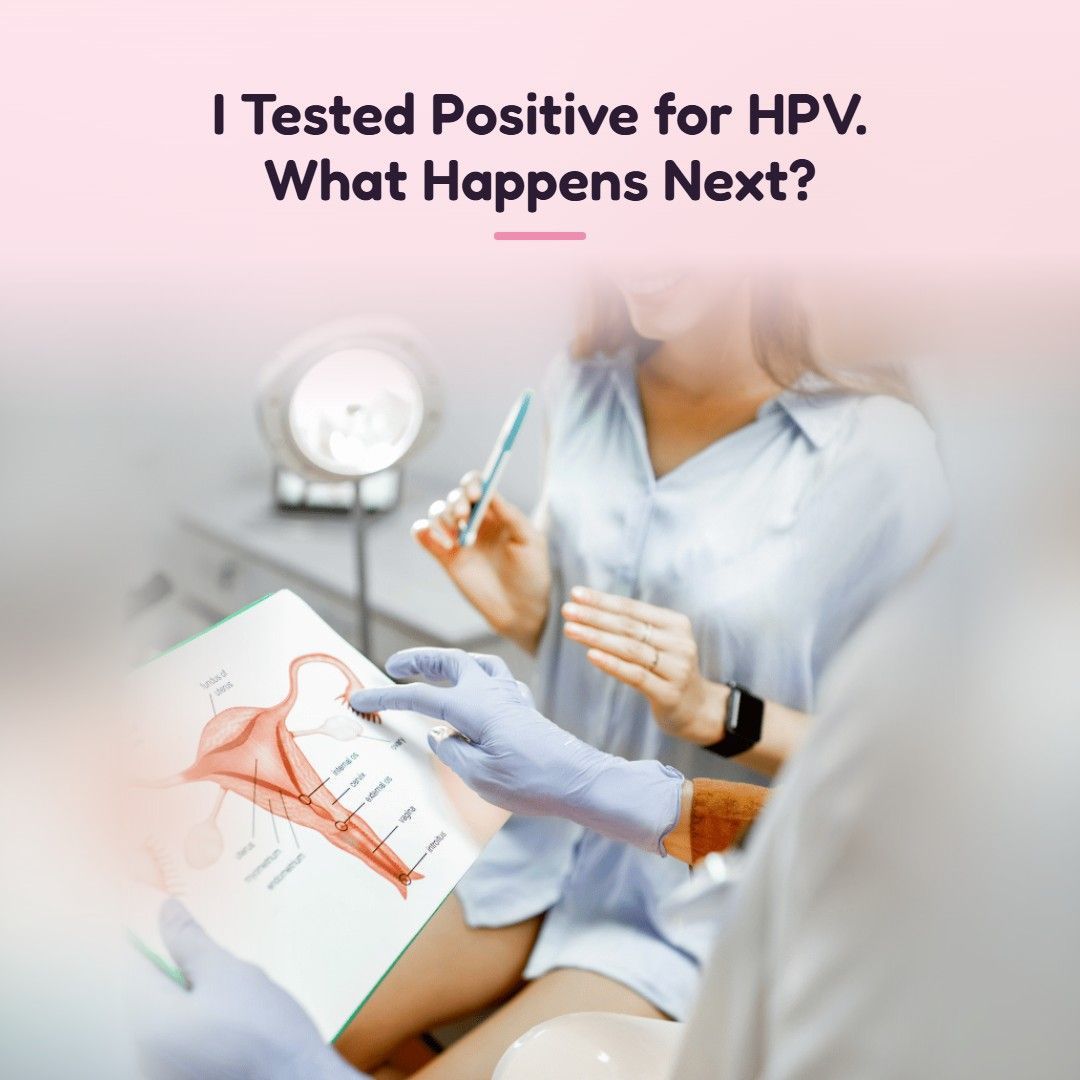
I Tested Positive for HPV. What Happens Next?
Quick answer: A positive HPV test is very common and usually not serious. What happens next depends on your Pap result and HPV type. If your Pap is normal and HPV 16/18 is negative, you usually repeat testing in about a year. If HPV 16 or 18 is found, or your Pap is abnormal, your gynecologist will usually recommend colposcopy.
How worried should you be?
HPV is the most common sexually transmitted infection worldwide. Most sexually active people get it at some point, usually without knowing, and the immune system clears most infections within one to two years.
Only a small share of persistent high-risk infections lead to precancerous changes, and those usually develop slowly. Screening exists to catch them early.
Step 1: Look at the full result
Your next step depends on three pieces of information. Ask for a copy of your report so you can see them.
- Pap (cytology) result: normal (NILM), ASC-US, LSIL, HSIL or other.
- HPV type: whether HPV 16 or 18 was detected, or "other high-risk types."
- Your history: previous results, past treatment, age and immune status.
Step 2: Understand the usual follow-up
| Your results | Common next step |
|---|---|
| Other high-risk HPV, Pap normal | Repeat HPV and Pap testing in about 1 year |
| HPV 16 or 18, Pap normal | Colposcopy is usually recommended |
| HPV positive, Pap ASC-US or LSIL | Colposcopy in most cases |
| HPV positive, Pap HSIL or ASC-H | Prompt colposcopy, sometimes direct treatment |
Exact plans vary with age and local guidelines, so treat this as a general map rather than a rule.
Step 3: If you need a colposcopy
A colposcopy is a closer look at the cervix with a magnifying instrument. It feels similar to a Pap smear but takes a little longer.
- A speculum is inserted, and a mild vinegar-like solution is applied to highlight abnormal areas.
- If something looks unusual, a small biopsy is taken. You may feel a brief pinch or cramp.
- Light spotting or dark discharge for a few days afterward is normal.
Biopsy results guide whether you simply monitor, or need a minor procedure such as LEEP to remove precancerous cells.
Step 4: Support your immune system
No medicine kills HPV, but some habits are linked to better clearance.
- Stop smoking: Smoking is clearly associated with persistent HPV and cervical precancer.
- Use condoms: They lower, though do not eliminate, transmission and re-exposure.
- Consider vaccination: If you are within the approved age range, the HPV vaccine may protect you against types you have not yet had.
- Look after general health: Sleep, nutrition and managing conditions that weaken immunity all help.
Be cautious about supplements or "HPV clearing" products sold online. They are not proven to remove the virus.
What about your partner?
Partners usually share HPV already, so testing them is not routinely recommended, and there is no approved routine HPV test for men. A positive result does not mean anyone was unfaithful, because HPV can remain silent for years.
Your partner can consider the HPV vaccine and should see a doctor about any genital warts or unusual lesions.
Follow-up in Korea
- Colposcopy and biopsy are widely available at women's clinics in Seoul.
- Tests ordered because of an abnormal result are often covered by NHIS at the usual co-pay; extended HPV typing panels are usually non-covered.
- If you are referred to a university hospital for treatment, bring a referral letter (진료의뢰서).
- Keep copies of your results in English if you may move abroad, so your next doctor can continue follow-up.
Frequently asked questions
Will I have HPV forever?
Usually not. Most infections become undetectable within one to two years, although the virus may stay dormant in some people.
Can I still have sex?
Yes. Your partner has likely been exposed already. Condoms add some protection, especially with new partners.
Does HPV affect fertility or pregnancy?
HPV itself does not usually affect fertility. Tell your obstetrician about any past cervical treatment.
How long until I am retested?
Often about 12 months if colposcopy is not needed. Your gynecologist will give you a specific date.
The bottom line
A positive HPV test is a reason for follow-up, not panic. Keep your next appointment, stop smoking if you smoke, and let the screening process do its job.
This article is for general information and does not replace medical advice. Do not delay follow-up testing, and see a doctor sooner if you notice bleeding after sex or between periods.