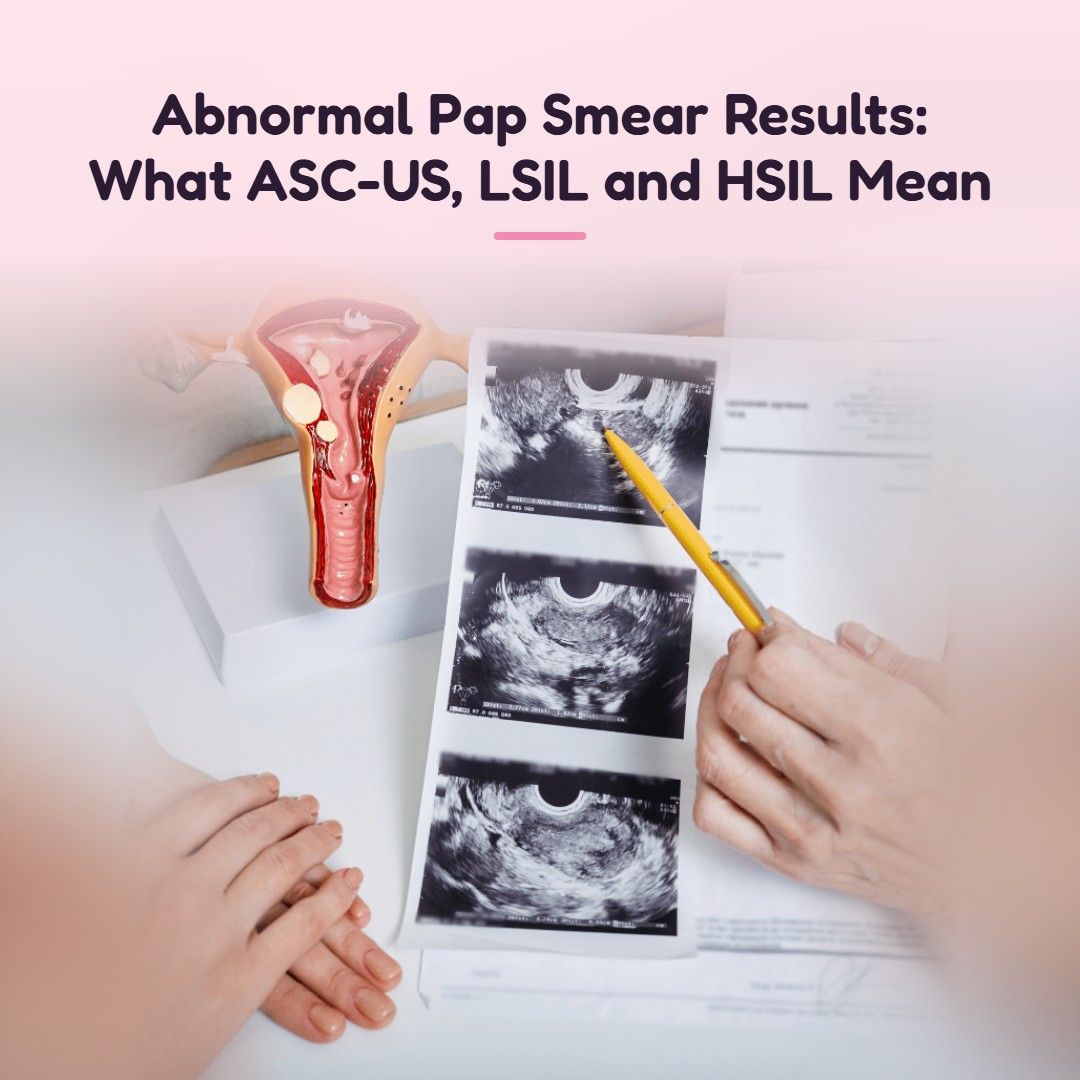
Abnormal Pap Smear Results: What ASC-US, LSIL and HSIL Mean
Quick answer: An abnormal Pap smear means some cervical cells look different under the microscope, not that you have cancer. ASC-US means mildly unclear changes, LSIL means low-grade changes usually caused by HPV that often clear on their own, and HSIL means higher-grade changes that need a closer look with colposcopy and sometimes treatment to prevent cancer.
First, take a breath
Abnormal Pap results are common, especially in women in their twenties and thirties. Most are linked to HPV, a very common virus that the immune system clears in most people within a year or two.
The purpose of screening is to find changes years before they could ever become cancer. An abnormal result means the system is working.
How are Pap results reported?
Most laboratories, including those in Korea, use the Bethesda System. Your report may be in English or Korean, so it helps to know both terms.
| Result | What it means | Typical next step |
|---|---|---|
| NILM (negative) | No abnormal cells found | Routine screening |
| ASC-US | Atypical squamous cells of undetermined significance: slightly unusual, unclear cause | HPV test, or repeat Pap in about a year |
| LSIL | Low-grade squamous intraepithelial lesion: mild changes, usually from HPV | Often colposcopy; younger women may repeat testing instead |
| ASC-H | Atypical cells, cannot exclude a high-grade lesion | Colposcopy |
| HSIL | High-grade squamous intraepithelial lesion: more significant precancerous changes | Colposcopy, and often treatment |
| AGC | Atypical glandular cells from the cervical canal or uterus | Colposcopy and often further sampling |
What does ASC-US mean?
ASC-US is the most common abnormal result. The cells are not clearly normal, but not clearly precancerous either. Inflammation, infection, low estrogen after menopause or a recent period can all cause it.
Many clinics run an HPV test on the same sample (reflex testing). If high-risk HPV is negative, the risk is very low and you usually return to routine or slightly shortened screening. If it is positive, colposcopy is commonly recommended.
What does LSIL mean?
LSIL means mild changes, often called CIN 1 or mild dysplasia when confirmed by biopsy. It almost always reflects an active HPV infection.
- Most LSIL changes go back to normal on their own, particularly in younger women.
- Your gynecologist may suggest colposcopy, or repeat testing in about a year, depending on your age and HPV result.
- Treatment is usually not needed unless the changes persist or progress.
What does HSIL mean?
HSIL means more significant changes (CIN 2 or CIN 3). This is still not cancer, but it has a real chance of progressing over years if left alone, so it should be taken seriously.
What usually happens next
- Colposcopy: The cervix is examined with a magnifying instrument, and small biopsies are taken from suspicious areas.
- Treatment if confirmed: Often a LEEP or conization, which removes the abnormal area. This is usually done at a hospital or specialized clinic.
- Follow-up: HPV and Pap testing for several years to make sure changes do not return.
In some younger women who want future pregnancies, close monitoring of CIN 2 may be an option. Your specialist will explain the trade-offs.
What about the HPV result?
Many reports list HPV separately, sometimes with types. HPV 16 and 18 carry the highest risk, so a positive result for these may lead to colposcopy even when the Pap looks normal.
Handling an abnormal result in Korea
- Ask for a copy of the report and an English explanation if needed.
- Colposcopy is often available at women's clinics; LEEP or conization may be done at a clinic with the right equipment or at a hospital.
- If you are referred to a university hospital, bring a referral letter (진료의뢰서) so NHIS rates apply.
- Diagnostic tests for an abnormal result are generally covered by NHIS at the usual co-pay, while optional extras may not be.
Frequently asked questions
Does an abnormal Pap smear mean I have cancer?
Very rarely. The vast majority of abnormal results are precancerous or minor changes that can be monitored or treated.
Did my partner give me HPV recently?
Not necessarily. HPV can stay silent for years, so a new result does not reveal when or from whom it was acquired.
Will treatment affect future pregnancy?
Most women have normal pregnancies afterward. Larger or repeated excisions can slightly raise the risk of preterm birth, so tell future obstetricians about it.
Can I still get the HPV vaccine?
Often yes, within the approved age range. It will not treat current changes but may protect against other HPV types.
The bottom line
ASC-US and LSIL are common and usually resolve on their own, while HSIL needs prompt colposcopy and often simple treatment. Keep every follow-up appointment, because that is what prevents cervical cancer.
This article is for general information and does not replace medical advice. If you have an abnormal result, do not skip follow-up, even if you feel completely well.