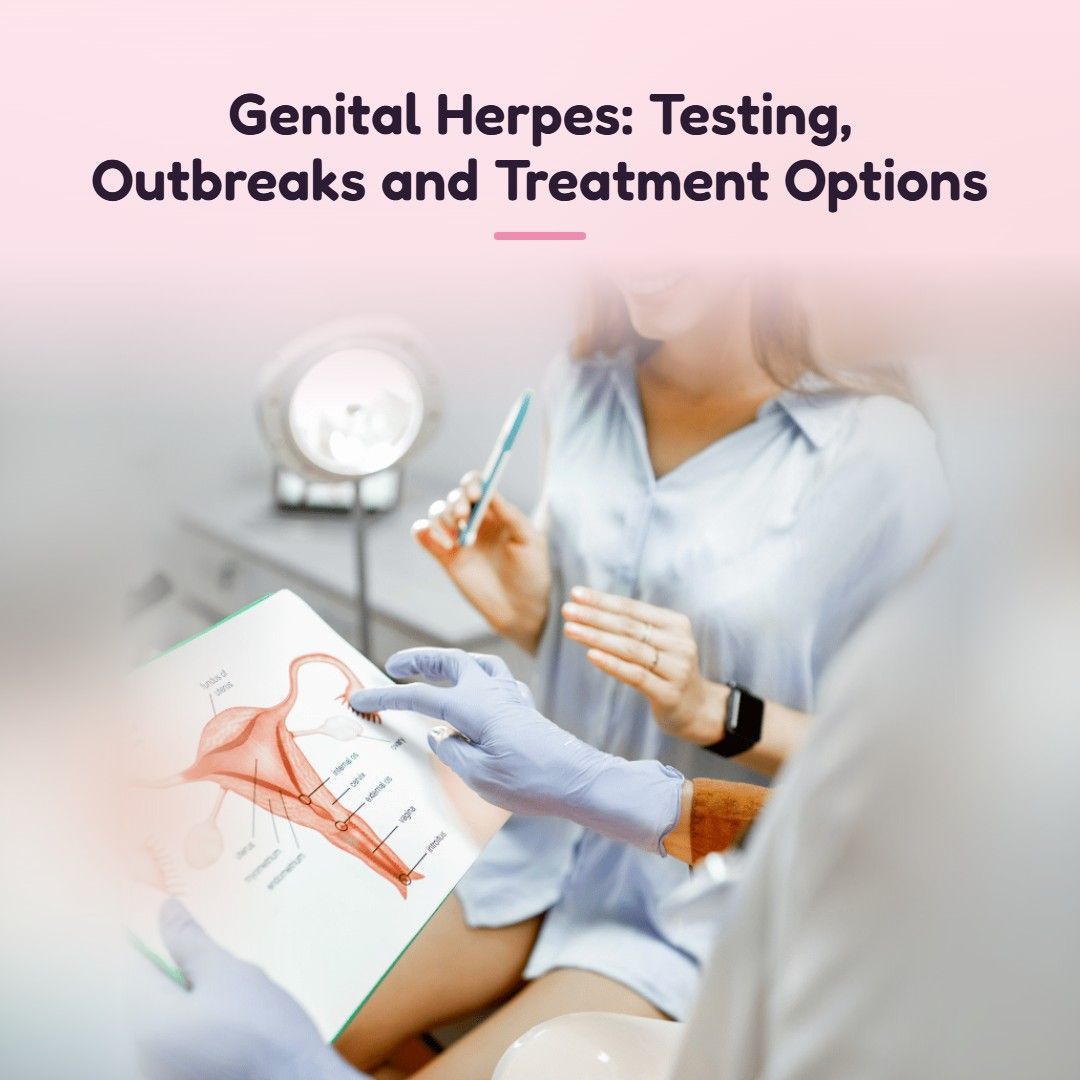
Genital Herpes: Testing, Outbreaks and Treatment Options
Quick answer: Genital herpes is a common, lifelong viral infection caused by HSV-1 or HSV-2. The best test is a PCR swab of a fresh sore. Outbreaks cause painful blisters or ulcers that heal on their own, usually becoming milder and less frequent over time. Antiviral medicines such as acyclovir or valacyclovir shorten outbreaks, and daily suppressive therapy reduces recurrences and the risk of passing it on.
What causes genital herpes?
Two herpes simplex viruses can cause genital infection:
- HSV-2: the classic cause of genital herpes, more likely to cause repeated outbreaks
- HSV-1: best known for cold sores, but now a common cause of genital herpes through oral sex; it tends to recur less often in the genital area
The virus stays in nerve cells for life and can reactivate. It spreads through skin-to-skin contact, including when no sores are visible.
What does an outbreak look like?
First episode
- Small, painful blisters or open sores on the vulva, vagina, cervix, buttocks or around the anus
- Burning or tingling, and pain when urinating
- Flu-like symptoms: fever, aches, swollen glands in the groin
- Usually heals within about 2 to 4 weeks
Recurrent outbreaks
- Often milder and shorter, typically healing within about a week
- Many people feel warning signs such as tingling, itching or nerve pain a day or so beforehand
- Triggers can include stress, illness, fatigue, friction and menstruation
Many people with herpes have very mild symptoms or none, and never know they have it.
How is herpes tested?
| Test | When it is used | Notes |
|---|---|---|
| PCR swab of a sore | When a blister or ulcer is present | Most accurate; identifies HSV-1 or HSV-2. Best done early, before the sore crusts |
| Type-specific blood test | Selected situations, such as a partner with herpes or unclear history | Shows past infection, not where it is located; antibodies can take weeks to months to appear |
Major guidelines do not recommend routine herpes blood testing for people without symptoms, because results can be difficult to interpret and false positives occur. If you notice a sore, see a doctor as soon as possible so it can be swabbed.
What are the treatment options?
There is no cure, but antiviral medicines are effective and well tolerated. Common options are acyclovir, valacyclovir and famciclovir.
Three ways to use antivirals
- First-episode treatment: usually about 7 to 10 days, to shorten symptoms and healing time.
- Episodic treatment: a short course started at the first sign of an outbreak, ideally within a day.
- Suppressive therapy: a daily dose that reduces how often outbreaks happen and lowers the risk of passing the virus to a partner.
Comfort measures during an outbreak
- Keep the area clean and dry; wear loose cotton underwear
- Pain relievers and warm baths can help
- Pouring water over the area while urinating may ease stinging
- Avoid sexual contact from the first warning signs until sores fully heal
Herpes and pregnancy
Most women with herpes have healthy pregnancies and babies. The highest risk to the baby is when a woman gets herpes for the first time late in pregnancy. Tell your obstetrician if you or your partner have herpes. Suppressive treatment is often offered in the final weeks, and delivery planning takes place at the hospital.
Getting care in Seoul
Women's clinics can examine and swab sores the same day, and antivirals are dispensed at pharmacies with a prescription. Care for symptoms is often partly covered by NHIS. Results are confidential, and English result sheets can usually be requested.
Frequently asked questions
Can I have a normal sex life with herpes?
Yes. Condoms, avoiding sex during outbreaks and daily suppressive therapy greatly reduce transmission risk.
Does herpes cause cancer?
No. Herpes does not cause cervical cancer; that is linked to HPV.
If I have cold sores, can I give my partner genital herpes?
Yes, HSV-1 can spread from the mouth to the genitals during oral sex. Avoid oral sex during cold sores.
The bottom line
Genital herpes is common and manageable. Get a sore swabbed early for an accurate diagnosis, and talk to your doctor about episodic or suppressive treatment.
This article is for general information and does not replace medical advice. If you are pregnant and develop genital sores, contact your obstetrician promptly.