Yeast Infection Treatment: When Over-the-Counter Isn't Enough
Quick answer: Over-the-counter antifungals clear most simple yeast infections within a few days to a week. See a gynecologist if it is your first episode, symptoms are severe or not improving, you get four or more infections a year, you are pregnant, or you have diabetes or a weakened immune system. You may need a test, prescription tablets or a longer treatment plan.
How does standard yeast infection treatment work?
Most vaginal yeast infections are caused by Candida albicans. Uncomplicated cases respond well to azole antifungals, which come in two main forms:
- Vaginal creams or pessaries such as clotrimazole or miconazole, used for 1 to 7 days
- A single oral tablet of fluconazole, which usually needs a prescription
Both approaches have similar success rates for simple infections. Symptoms often improve within two or three days, though full relief can take up to a week.
Buying treatment in Korea
Some vaginal antifungal products are available at pharmacies (약국) without a prescription, while oral fluconazole generally requires one. A pharmacist can show you what is stocked; bringing the generic name helps.
When is over-the-counter not enough?
It might not be yeast
Many women who self-diagnose a yeast infection actually have bacterial vaginosis, trichomoniasis, another STI or skin irritation. Antifungals will not treat these, so symptoms continue.
Severe symptoms
Extensive redness, swelling, cracks or sores of the vulva usually need a longer course, such as two or three doses of fluconazole spaced a few days apart, or a longer topical course.
Recurrent infections
Four or more symptomatic episodes in a year is called recurrent vulvovaginal candidiasis. It typically needs a culture to confirm the species, an initial longer treatment, then a maintenance plan such as weekly fluconazole for around six months.
Non-albicans species
Some yeasts, such as Candida glabrata, respond poorly to standard azoles. A culture identifies them, and your doctor may choose a different treatment.
Special situations
- Pregnancy: topical azoles for about 7 days are usually preferred; oral fluconazole is generally avoided.
- Diabetes: high blood sugar makes yeast more likely and harder to clear.
- Weakened immunity or long-term steroid use.
Signs you should book a visit
- This is your first suspected yeast infection
- No improvement after finishing an over-the-counter course
- Symptoms return within two months
- Discharge has a strong odor, is grey or green, or is frothy
- You have sores, blisters, bleeding, fever or pelvic pain
- You have a new partner or possible STI exposure
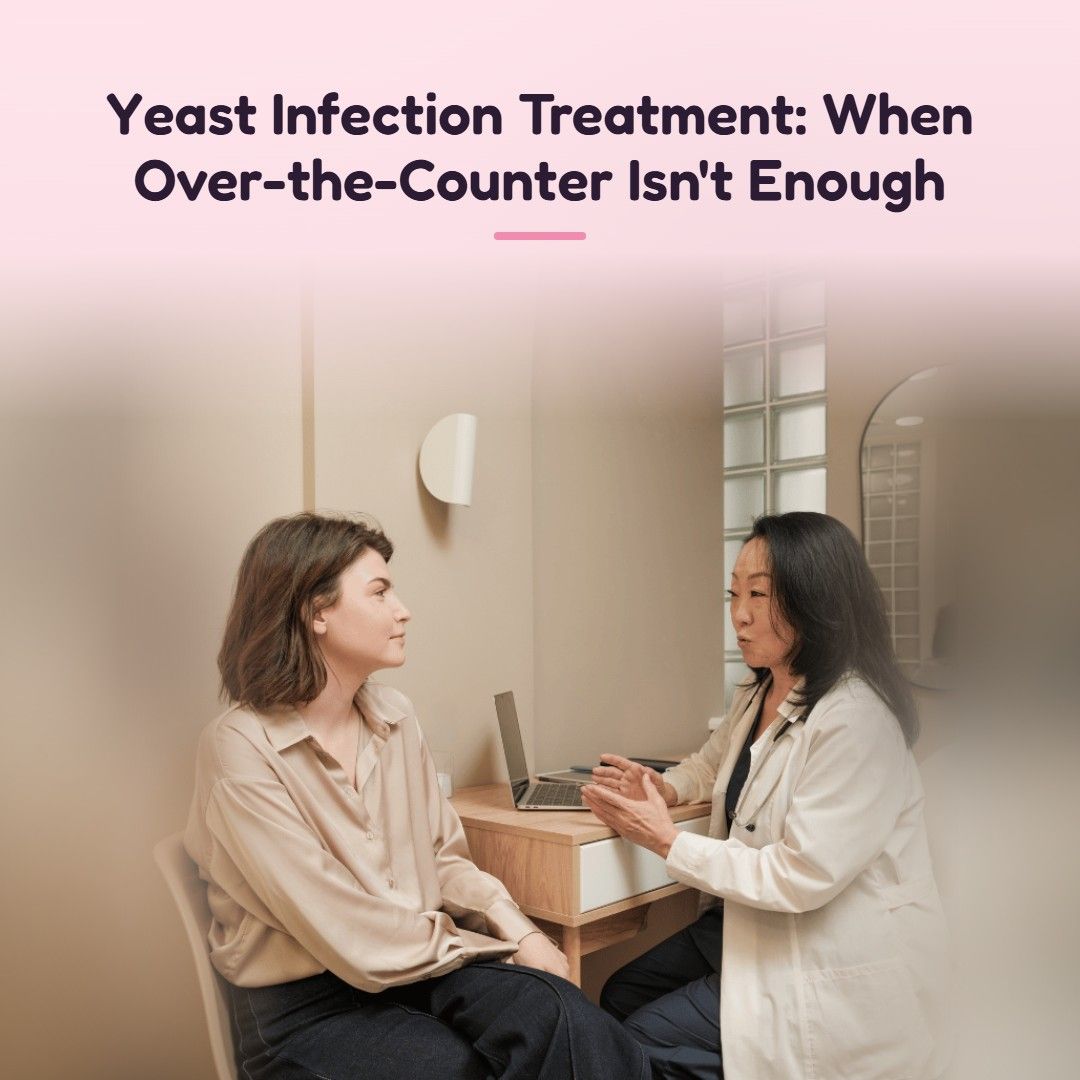
What will your gynecologist do?
Expect a short history and an examination. A swab can be checked for pH and under the microscope, which often confirms yeast during the visit. A culture or PCR test may be sent to the lab for recurrent or unusual cases.
Your doctor may also suggest checking blood sugar if infections keep returning. Treatment is then tailored: stronger or longer antifungals, a different drug class, or a maintenance plan.
For residents enrolled in National Health Insurance, consultation, standard tests and prescribed antifungals are generally covered with the usual co-pay at a clinic (의원). Ask about the cost of extended panels before testing.
Tips to help treatment work
- Complete the full course, even if you feel better early.
- Wear loose cotton underwear and change out of damp clothes quickly.
- Skip scented washes, douches and wipes.
- Note that some vaginal creams can weaken latex condoms and diaphragms.
- Avoid sex until symptoms settle to reduce irritation.
Frequently asked questions
Can yogurt or probiotics cure a yeast infection?
There is not strong evidence that yogurt or probiotics treat an active infection. They should not replace antifungal treatment.
Does my partner need treatment?
Usually not. Yeast infections are not considered sexually transmitted, although a male partner with symptoms of balanitis should see a doctor.
Can antibiotics cause yeast infections?
Yes. Antibiotics can reduce protective vaginal bacteria. If this happens to you often, ask your doctor about preventive antifungal treatment when you need antibiotics.
Is it safe to use treatment during my period?
Oral treatment is unaffected. Vaginal products can still be used, but avoid tampons, which may absorb the medication.
The bottom line
Over-the-counter antifungals work well for occasional, uncomplicated yeast infections in women who have had one diagnosed before. When symptoms are new, severe, frequent or unresponsive, a gynecologist can confirm the cause and offer treatment that actually fits.
This article is for general information and does not replace medical advice. If you are pregnant, check with your doctor before using any yeast infection medication.