
How Is Endometriosis Diagnosed Without Surgery?
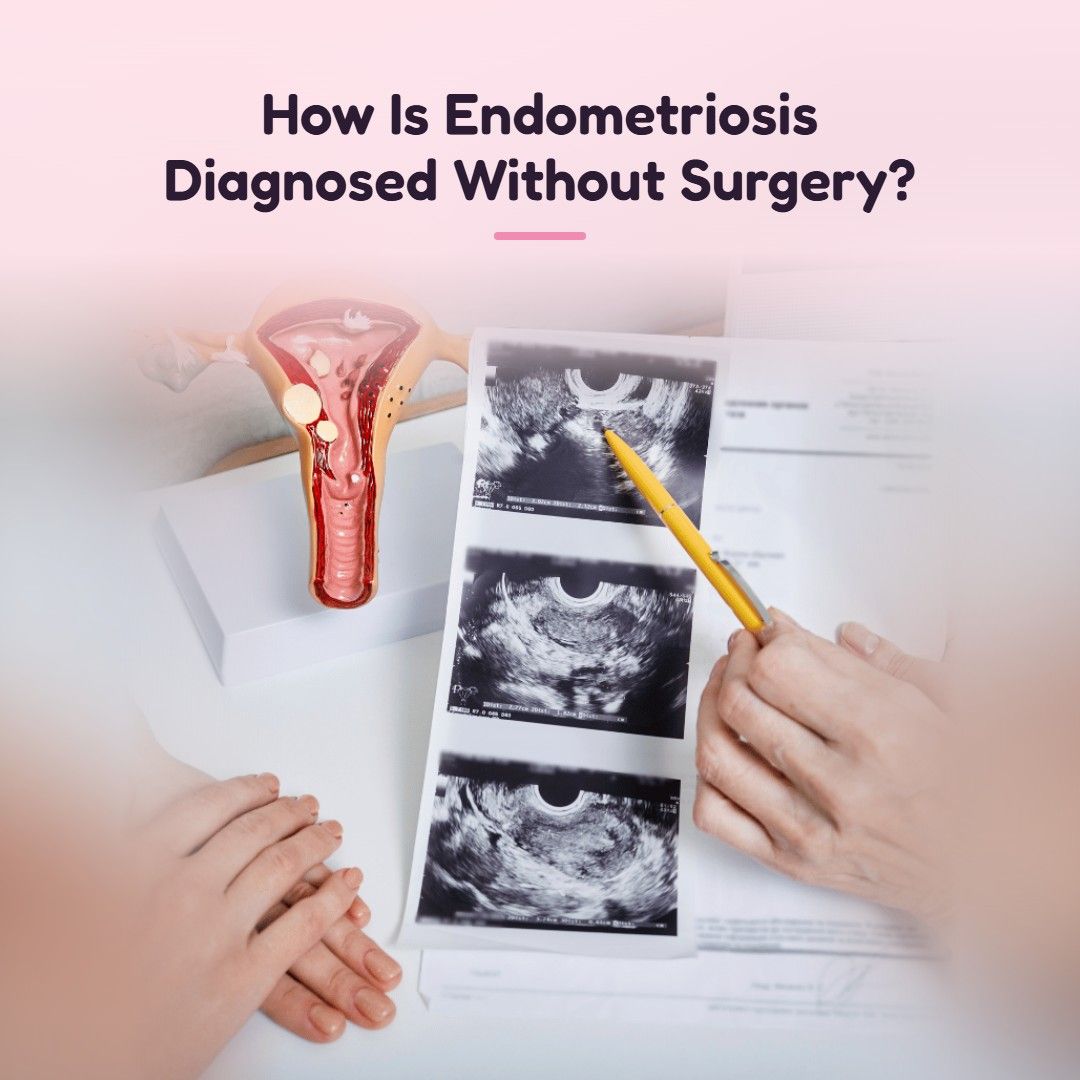
Quick answer: Endometriosis can often be diagnosed without surgery by combining your symptom history, a pelvic exam and imaging, mainly transvaginal ultrasound and sometimes MRI. Ultrasound reliably detects ovarian endometriomas and can show deep disease, while superficial lesions may not be visible. Guidelines now support starting treatment on a clinical diagnosis, reserving laparoscopy for selected cases.
Why has surgery been the traditional route?
For decades, laparoscopy, a keyhole operation under general anesthesia, was considered the gold standard because it allows a surgeon to see lesions directly and take biopsies.
The downside is that surgery carries risks and costs, and waiting for it contributed to long delays in diagnosis. International guidance, including from ESHRE and NICE, now recognizes imaging and clinical assessment as valid first steps.
Step 1: A detailed symptom history
Your gynecologist will ask about:
- When period pain started and whether it has worsened over time
- How much pain relief helps and how often you miss work or study
- Pain during sex, bowel movements or urination
- Pelvic pain between periods
- Difficulty becoming pregnant
- Family history of endometriosis
A symptom diary or a pain score for a few cycles before your visit is very helpful.
Step 2: Pelvic examination
A gentle internal exam can reveal tenderness, nodules behind the uterus, a uterus that does not move freely, or an enlarged ovary. A normal exam does not rule out endometriosis, but abnormal findings increase suspicion.
Step 3: Transvaginal ultrasound
This is the main imaging test, quick and widely available at women's clinics in Seoul.
What it can show
- Endometriomas: ovarian cysts with a typical ground-glass appearance, detected with high accuracy
- Deep endometriosis: nodules affecting the bowel, ligaments or bladder, when scanned by an experienced sonographer
- Sliding sign: whether organs glide freely, which can suggest adhesions
- Adenomyosis, which often coexists
What it can miss
Small superficial lesions on the pelvic lining usually cannot be seen on any imaging. A normal ultrasound therefore does not exclude endometriosis.
If transvaginal scanning is not suitable, for example if you have never been sexually active, a transabdominal or transrectal approach may be offered.
Step 4: MRI in selected cases
MRI is useful for mapping deep endometriosis before surgery or when ultrasound findings are unclear. It is usually arranged through a hospital. Check with your doctor whether it would be covered by insurance in your situation, as coverage depends on the indication.
What about blood tests?
CA-125 can be raised in endometriosis but also in many other conditions, and can be normal with endometriosis. It is not recommended as a diagnostic test on its own. Research into blood and saliva tests continues, but none is yet standard care.
Starting treatment without surgery
If your symptoms and findings fit, your gynecologist may make a clinical diagnosis and start treatment, such as:
- Anti-inflammatory painkillers
- Combined pills taken continuously
- Progestins such as dienogest
- A hormonal IUD
Improvement on hormonal treatment supports the diagnosis, although lack of response does not rule it out.
When is laparoscopy still recommended?
- Imaging is normal but symptoms persist despite treatment
- Large endometriomas or deep disease affecting organs
- Uncertainty about the diagnosis
- Some fertility situations
Laparoscopy is carried out at hospitals. A clinic can provide a referral letter (진료의뢰서), which you need for NHIS rates at tertiary hospitals.
Frequently asked questions
Can a normal ultrasound mean I do not have endometriosis?
Not necessarily. Superficial disease is often invisible on imaging, so symptoms still guide care.
Is transvaginal ultrasound painful?
It is usually only mildly uncomfortable. Tell the doctor if it hurts; they can adjust or stop.
Does a clinical diagnosis count for insurance?
Doctors in Korea record a diagnosis code based on their assessment. Coverage for specific medications may follow set criteria, so ask your clinic.
The bottom line
You do not always need surgery to be diagnosed and treated for endometriosis. A careful history, exam and good-quality ultrasound often provide enough information to start effective treatment, with surgery kept for when it truly adds value.
This article is for general information and does not replace medical advice. Sudden severe pelvic pain or fainting may signal a ruptured cyst or other emergency; seek urgent care.