What Is Included in a Women's Health Checkup in Korea?
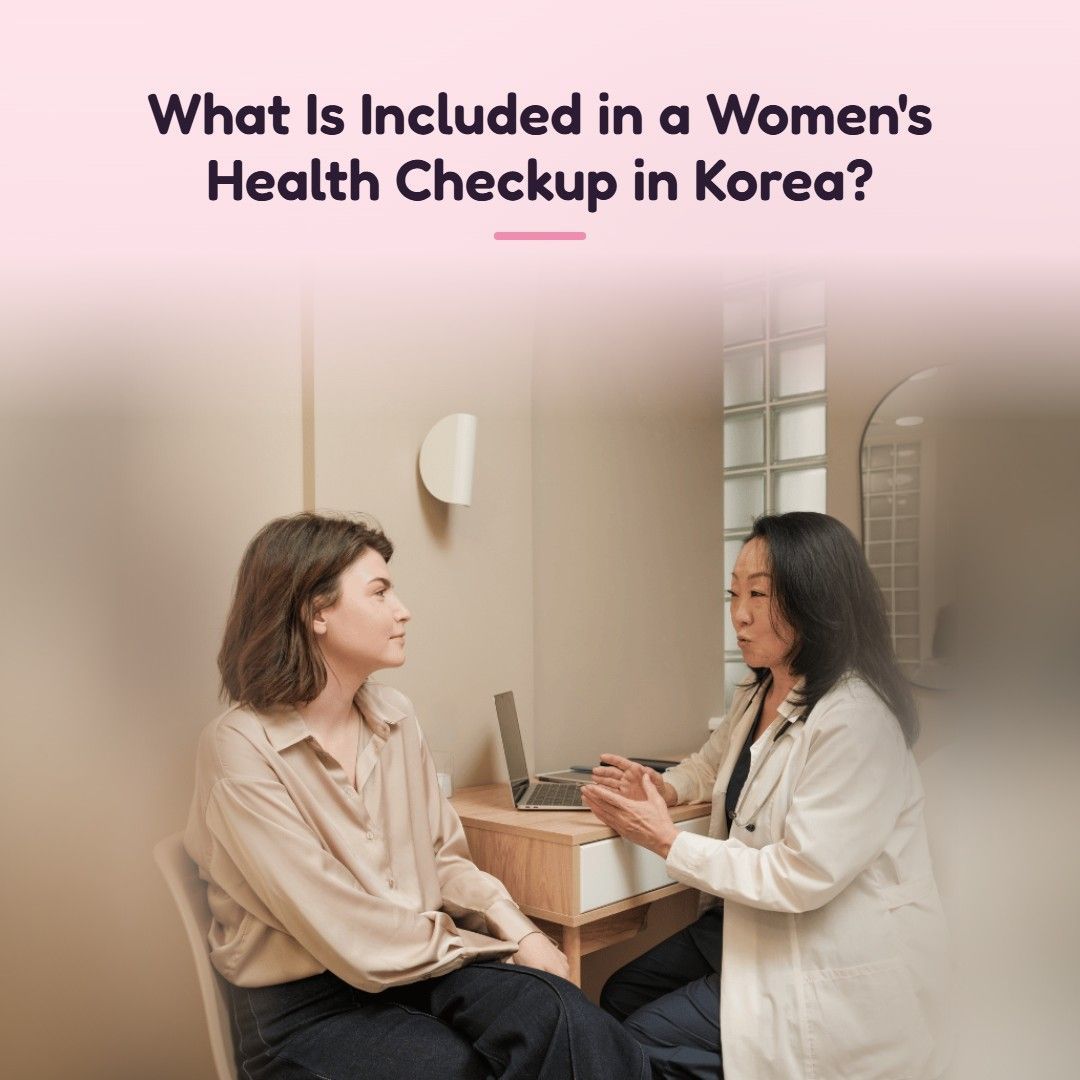
Quick answer: A women's health checkup in Korea usually combines a consultation, a Pap smear (often with an HPV test), a pelvic ultrasound, and sometimes a breast ultrasound, STD tests and blood work. NHIS members also get free national screenings, such as a Pap smear every two years from 20 and mammography from 40. Optional extras are priced by each clinic.
Two layers: national screening and clinic packages
Checkups in Korea come in two parts, and it helps to understand both before you book.
1. Free or low-cost national screening (NHIS)
If you are enrolled in National Health Insurance, you receive invitations for the national general health checkup and cancer screenings based on age. Most foreign residents staying six months or more are enrolled.
2. Optional checkup packages
Women's clinics and health screening centers offer packages that add tests not included in the national program. These are usually non-covered and priced individually.
What the national program covers for women
| Screening | Who | How often |
|---|---|---|
| General health checkup (blood pressure, BMI, basic blood and urine tests, vision, hearing) | Adults, based on insurance type | Usually every 2 years |
| Cervical cancer: Pap smear | Women 20+ | Every 2 years |
| Breast cancer: mammography | Women 40+ | Every 2 years |
| Stomach cancer: endoscopy | Adults 40+ | Every 2 years |
| Colorectal cancer: stool test | Adults 50+ | Every year |
| Liver cancer | High-risk adults 40+ | Every 6 months |
Eligibility details can change, so check your NHIS notice or the NHIS website or app for your own schedule.
What a women's clinic checkup usually includes
Core tests
- Consultation: periods, contraception, symptoms, family history
- Pap smear: screening for cervical cell changes
- HPV test: recommended especially from age 30
- Pelvic ultrasound: checks the uterus and ovaries for fibroids, cysts and polyps
Common add-ons
- Breast ultrasound: frequently added, particularly for dense breasts
- STD panel: chlamydia, gonorrhea, mycoplasma and others, often by PCR
- Blood tests: anemia, thyroid function, liver and kidney function, blood sugar, cholesterol
- Infection and immunity checks: hepatitis B, rubella or HIV, useful before pregnancy
- Hormone tests: such as AMH for ovarian reserve, if you are planning pregnancy
- Vaccines: HPV, hepatitis, flu, MMR or Tdap if needed
How to choose the right package
- In your 20s: Pap smear, STD testing if sexually active, HPV vaccination if not done, and ultrasound only if you have symptoms.
- In your 30s: Add HPV testing, consider pelvic ultrasound, and preconception tests if planning pregnancy.
- In your 40s and beyond: Mammography plus breast ultrasound if breasts are dense, pelvic ultrasound, and broader blood tests.
More tests are not always better. Ask the clinic which ones fit your age and history, rather than choosing the largest package by default.
Practical tips for foreigners
- Book by KakaoTalk, Naver or phone, and confirm English support.
- Bring your ARC or passport. Your NHIS eligibility is checked at registration.
- Avoid booking during your period for a Pap smear.
- Fasting may be needed for blood sugar and cholesterol tests. Ask in advance.
- Request an English report, a receipt (영수증) and an itemized bill (진료비 세부내역서) for private insurance claims.
- Results for most tests take about one to two weeks.
Frequently asked questions
Can I do the national Pap smear at a women's clinic?
Yes, if the clinic is a designated national screening center (국가검진기관). Ask when booking.
What if I am not enrolled in NHIS?
You can still get all tests privately. Prices are set by each clinic, so request a quote first.
How long does a checkup take?
A basic women's checkup often takes under an hour, while larger packages with several scans may take longer.
The bottom line
A women's checkup in Korea pairs free national screenings with optional clinic tests. Use what NHIS already offers, then add the tests that match your age, symptoms and plans.
This article is for general information and does not replace medical advice. Do not wait for a scheduled checkup if you have unusual bleeding, a breast lump or persistent pelvic pain.